

The Psychology Behind Feeling Numb When You Should Feel Something
Your best friend tells you they are moving across the country. You know this is sad. You know you will miss them. But when you try to access the feeling, there is nothing. Just a flat, hollow awareness that something should be there.
You get a promotion at work. People congratulate you. You smile and say thank you. But internally, the achievement lands with no weight. No excitement. No pride. Just a vague recognition that this is supposed to matter.
This experience - feeling numb when you should feel something - is more common than most people realize. It has a clinical term: emotional numbness or, in some contexts, anhedonia. And it is not the same as not caring. It is a specific psychological state with distinct neurological patterns, often signaling that something deeper is happening beneath the surface.
What Emotional Numbness Actually Is
Emotional numbness is the experience of blunted affect - a reduction in the intensity or accessibility of emotional responses. It is not that emotions are gone entirely. It is that the pathways between event and emotional experience have been dampened or temporarily shut down.
People often describe it as:
• Feeling disconnected from your own life, like watching it through glass.
• Knowing intellectually that something is meaningful but not feeling it emotionally.
• An inability to access joy, sadness, anger, or excitement even in situations that used to trigger them.
• A pervasive flatness or emptiness that makes everything feel equally unimportant.
This is different from the difference between sadness and depression. Sadness is still a felt emotion. Numbness is the absence of emotional experience altogether.
The Brain Science of Emotional Shutdown
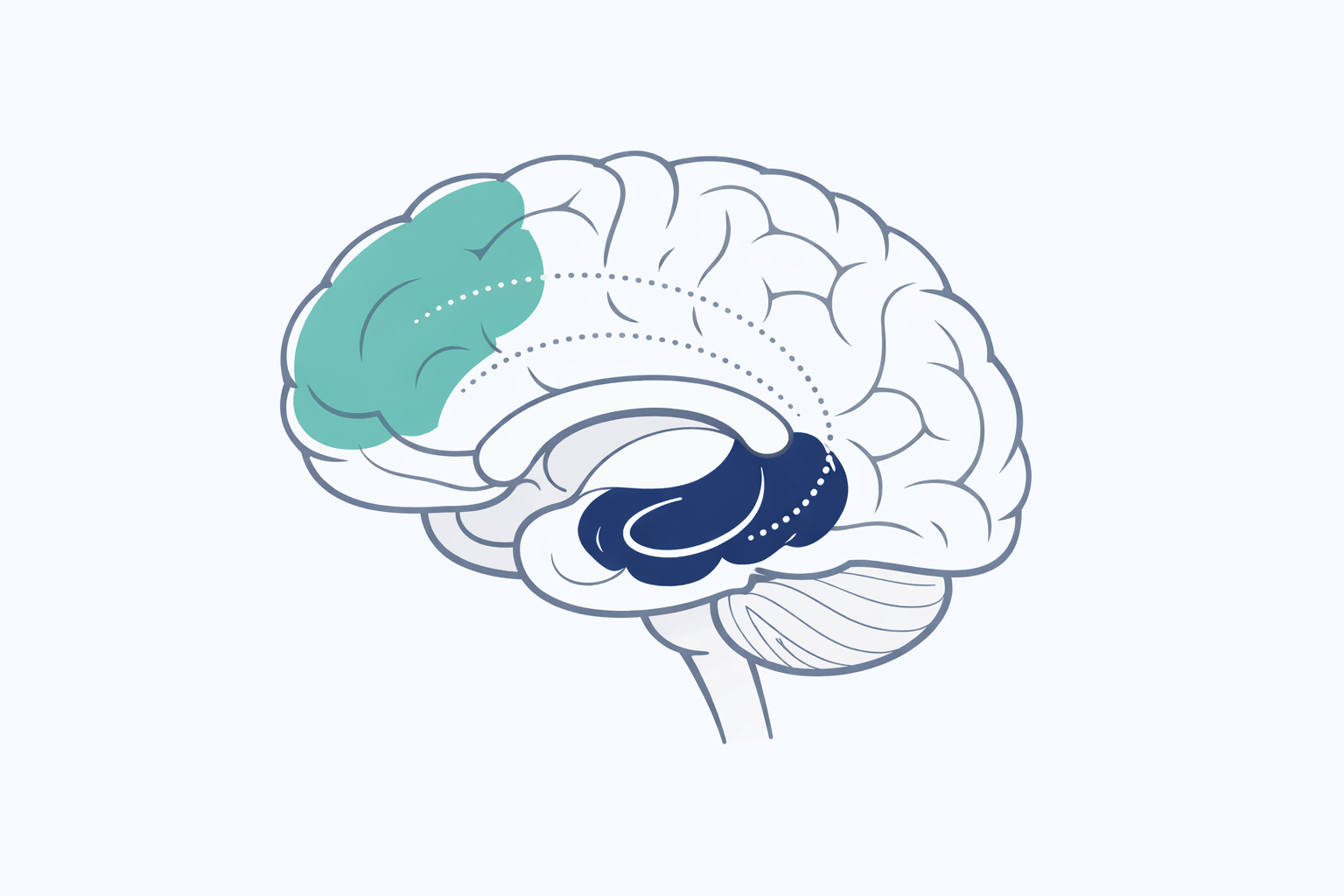
Emotional numbness has neurological roots. Research suggests it involves changes in how the brain processes emotional information, particularly in the prefrontal cortex (responsible for emotion regulation) and the limbic system (responsible for generating emotions).
When you experience prolonged stress, trauma, or emotional overload, your brain can activate what researchers call dissociative processes. Essentially, the brain reduces emotional intensity as a way of protecting you from being overwhelmed.
In the short term, this is adaptive. If you are in the middle of a crisis, shutting down emotional processing allows you to function - to make decisions, to take action, to survive. But when the shutdown persists after the crisis has passed, it becomes emotional numbing - a state where you are safe but still cannot access your emotional range.
Why Your Brain Shuts Down Emotions
Emotional numbness is not random. It typically shows up for specific psychological reasons.
1. Protection From Overwhelm
The most common trigger for emotional numbness is emotional overload. When you have been carrying too much - grief, stress, anxiety, fear - for too long, your brain essentially says: We cannot process any more of this right now. It shuts down emotional input as a survival strategy.
This is why emotional numbness often appears during or after periods of intense stress, loss, or trauma. The system is temporarily offline while it tries to recover.
2. Chronic Stress and Burnout
Prolonged exposure to stress depletes the neurochemicals involved in emotional regulation - particularly dopamine and serotonin. When these systems are exhausted, emotional flatness is one of the most common symptoms. This pattern is explored further in the hidden signs your body is under chronic stress.
3. Depression
Emotional numbness is one of the core features of clinical depression. It is not just sadness - it is anhedonia, the inability to experience pleasure or emotional connection. Many people with depression describe it not as crying all the time but as feeling nothing at all.
4. Trauma and Dissociation
When trauma overwhelms your capacity to process it, the brain can use dissociation as a defense mechanism. Emotional numbness is a form of dissociation - you are present physically but emotionally disconnected. This keeps unbearable feelings at a distance.
5. Medication Side Effects
Certain medications, particularly some antidepressants and antipsychotics, can cause emotional blunting as a side effect. If you started feeling numb after beginning a new medication, this is worth discussing with your prescriber.
The Difference Between Numbness and Apathy
People often confuse emotional numbness with apathy, but they are psychologically distinct.
Apathy is a lack of interest or motivation. You do not care whether something happens or not. There is no drive to engage.
Emotional numbness is the inability to feel even when you intellectually recognize that something matters. You want to feel - you know you should - but the emotional response is not there.
Apathy is often a motivational issue. Numbness is an emotional accessibility issue. The distinction matters because they require different approaches.
What Emotional Numbness Feels Like in Practice
Numbness does not always look like lying in bed unable to move. Often, it looks like functioning normally while feeling completely disconnected.
Common experiences include:
• Going through the motions of your day without any emotional engagement.
• Receiving good news and feeling nothing, then feeling guilty for not feeling happy.
• Being unable to cry even when you want to.
• Feeling like you are observing your own life from the outside rather than living it.
• Struggling to connect with people you care about because you cannot access warmth or affection.
• Noticing that things that used to bring you joy - hobbies, relationships, achievements - now feel pointless or empty.
If this resonates, you might also recognize the pattern described in why you feel sad when nothing seems wrong - the vague sense that something is off, but no clear emotional content to name it.

When Emotional Numbness Becomes a Concern
Temporary emotional numbness after a crisis or major life event is common and often resolves on its own as your nervous system regulates. But persistent numbness - especially if it lasts weeks or months - is a signal worth taking seriously.
Signs that numbness has become a mental health concern:
• It has persisted for more than two weeks without improvement.
• It is affecting your ability to function at work, in relationships, or in daily life.
• You have noticed withdrawal from activities or people you used to value.
• You are having thoughts of hopelessness or wondering if life is worth living.
• The numbness appeared alongside other symptoms like sleep disturbances, appetite changes, or difficulty concentrating.
If several of these apply, it is worth speaking with a mental health professional. Emotional numbness is often a symptom of depression, trauma, or burnout - all of which respond well to treatment.
How to Respond When You Feel Nothing
You cannot force yourself to feel. Trying to generate emotions through willpower typically backfires - it just adds guilt and frustration on top of the numbness. Instead, the goal is to create conditions where emotions can gradually return.
1. Name What Is Happening
Say it out loud or write it down: I am feeling numb right now. Naming the experience reduces the confusion and self-judgment. It is not that you are broken - it is that your emotional system is temporarily offline.
2. Reduce Emotional Demands
If your brain has shut down emotions because it is overloaded, the answer is not to push harder. It is to reduce the load. Give yourself permission to step back from emotionally demanding situations where possible.
3. Engage Your Body
Emotions are not just mental - they live in the body. Physical movement, especially rhythmic activities like walking or swimming, can help reconnect you to bodily sensations, which often precede emotional reconnection.
4. Reconnect With Small Pleasures
You might not feel joy from big things right now, but sometimes small sensory experiences can create tiny cracks in the numbness - warm sunlight, cold water on your face, music you loved as a teenager. These are not cures, but they are reminders that sensation is still possible.
5. Seek Professional Support
Therapy - particularly trauma-focused approaches like EMDR or somatic therapy - can help your nervous system process what it has been holding. Medication, when appropriate, can also help restore the neurochemical balance that supports emotional processing.
What Emotional Numbness Is Trying to Tell You
Numbness is not the enemy. It is information. It is your brain saying: Something has been too much for too long, and I need to protect you from it.
The question is not how do I make this go away immediately. The question is: What has my system been carrying that it needed to shut down to cope?
Sometimes the answer is recent trauma. Sometimes it is years of accumulated stress. Sometimes it is unprocessed grief or a life that has drifted too far from what you actually value. The numbness does not tell you the answer - but it tells you there is a question worth asking.
Feeling Nothing Is Still Feeling Something
Feeling numb when you should feel something is not a sign that you are broken or beyond repair. It is a sign that your emotional system is overwhelmed and has temporarily gone offline to protect you.
Numbness is not permanent. It is a state, not a trait. With time, support, and the right conditions, emotional range returns. The feelings do not disappear - they are just waiting until it is safe to come back.
If you are in the middle of numbness right now, that might be hard to believe. But the fact that you are reading this - that you are noticing the absence of feeling and wondering why - is already evidence that something in you is still reaching. And that reach, however faint, is where reconnection begins.


