

Why We Remember Insults Longer Than Compliments
You give a presentation at work. Fifteen people tell you it was excellent. One person says it was "a bit unclear in the middle." That night, lying in bed, which comment do you replay? The fifteen compliments - or the one piece of criticism?
For most people, it's the criticism. And it's not just presentations. A single harsh word from a partner can overshadow weeks of kindness. One bad review among dozens of positive ones can ruin your day. A throwaway insult from years ago can still sting when you recall it.
This isn't a personal failing. It's a documented psychological phenomenon called negativity bias - the brain's tendency to give more weight to negative experiences than positive ones. Understanding why we remember insults longer than compliments doesn't just explain the pattern. It gives you tools to work with it instead of being controlled by it.
The Neuroscience Behind Negativity Bias
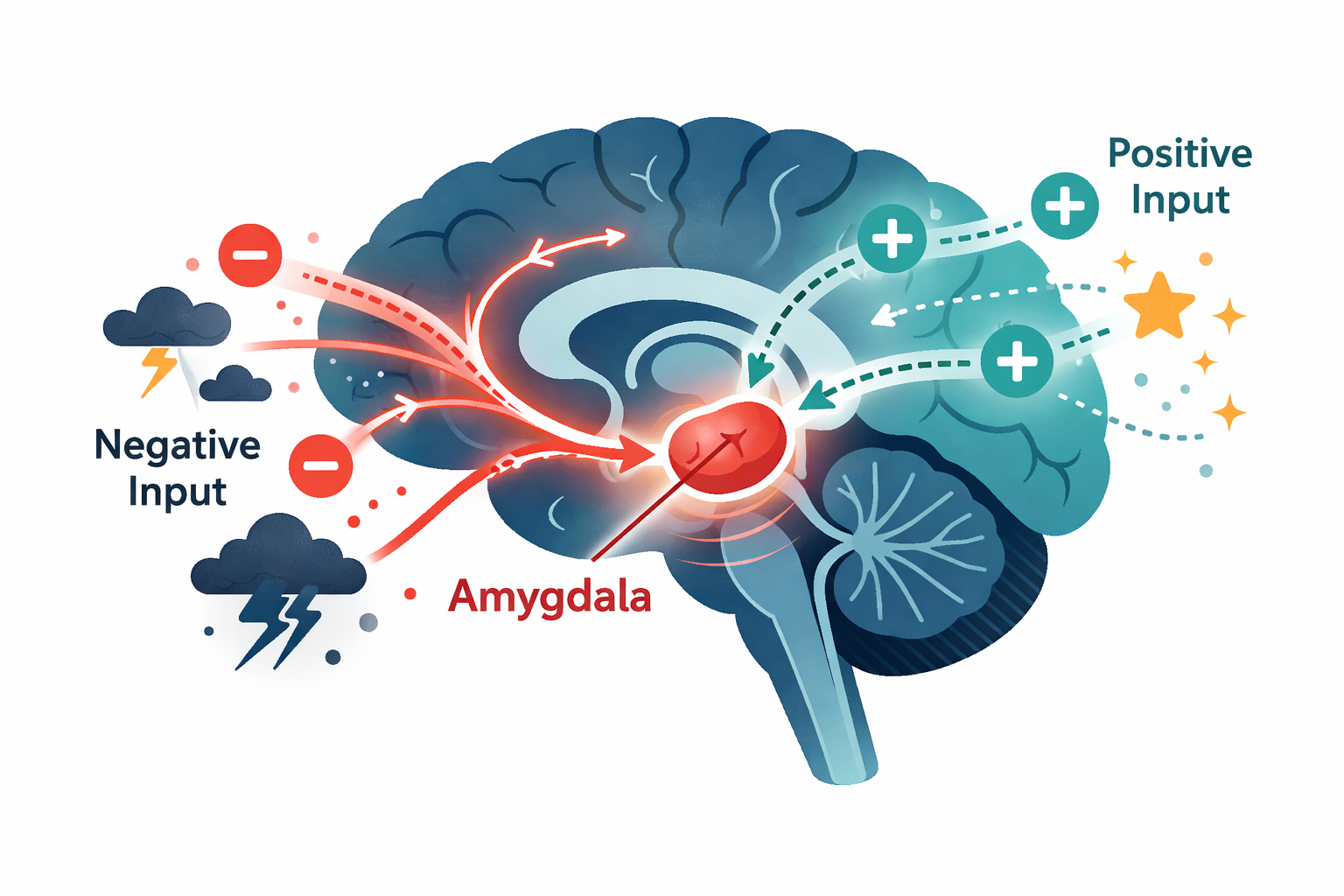
Research in neuroscience shows that your brain processes negative information differently from positive information. When something negative happens - an insult, a failure, a threat - your amygdala (the brain's alarm system) activates more intensely than it does for positive events.
This heightened activation does two things. First, it focuses your attention on the negative stimulus, making it harder to ignore. Second, it encodes the memory more deeply. Negative experiences don't just pass through your brain - they get stamped in with emotional ink.
Psychologist Roy Baumeister famously summarized decades of research with the phrase: "Bad is stronger than good." Studies suggest it takes roughly five positive interactions to counterbalance the emotional impact of one negative interaction. That's not a metaphor. That's measurable in brain activity and memory recall.
Why Evolution Made You This Way
Negativity bias isn't a design flaw. It's a survival feature that kept your ancestors alive.
Imagine two early humans. One pays close attention to positive experiences - a good meal, a safe shelter, a friendly interaction. The other pays close attention to negative experiences - a rustle in the bushes that might be a predator, a poisonous plant, a rival who showed aggression.
The first human has a pleasant life. The second human survives long enough to reproduce.
Your brain evolved in an environment where the cost of ignoring a threat was death, but the cost of ignoring a reward was just a missed opportunity. So your brain developed a system that prioritizes threats, criticism, and anything that signals danger - including social rejection, which in ancestral environments could mean literal exile and death.
This connects directly to why your brain remembers bad moments more than good ones - the mechanism is identical. Negative information gets processed as survival-relevant, even when the "threat" is just an awkward comment at a dinner party.
The 5-to-1 Ratio and Why Compliments Feel Slippery
Research suggests you need approximately five positive interactions to psychologically balance out one negative interaction. This ratio shows up across contexts - in relationships, workplace feedback, and self-talk.
But here's the catch: positive experiences don't just need to outnumber negative ones. They need to be noticed and absorbed. And that's harder than it sounds.
Compliments often feel slippery. Someone says, "Great job on the report," and your brain processes it in a second, files it under "nice," and moves on. But someone says, "The report had some errors," and your brain locks onto it. You replay it. You analyze it. You wonder what they really meant.
The difference isn't in the intensity of the original statement. It's in how your brain decides what's worth remembering. Threats demand attention. Compliments are pleasant but not urgent.
Why Insults Feel More True Than Compliments
There's another layer to this: insults often feel more believable than compliments. This is partly negativity bias, but it's also about self-concept and confirmation bias.
If you have an underlying belief that you're not good enough - and most people carry some version of this - then criticism confirms what you already suspect. It slots neatly into your existing narrative. Compliments, on the other hand, create cognitive dissonance. They contradict the internal story, so your brain works harder to dismiss them.
"They are just being nice." "They do not really know me." "They are exaggerating." Your brain generates explanations to protect the existing self-concept, even when that self-concept is unfairly harsh.
This pattern connects to how shame rewires your sense of self-worth - when negative feedback aligns with shame-based beliefs, it gets amplified. When positive feedback contradicts those beliefs, it gets filtered out.
The Social Threat System
Your brain doesn't just react to physical danger. It treats social rejection with the same neural alarm system. An insult, a dismissive comment, or even a lack of acknowledgment activates your threat response.
Neuroscience research shows that social pain - the feeling of being excluded, criticized, or rejected - activates similar brain regions as physical pain. This is why an insult can genuinely hurt. It's not just hurt feelings. Your brain is processing it as a threat to your survival and belonging.
Compliments, by contrast, activate reward circuits - but those circuits are quieter and less urgent. They feel good, but they don't trigger the same level of brain activity as threats. So compliments fade faster. They don't demand the same mental real estate.

How to Work With Negativity Bias (Not Against It)
You can't turn off negativity bias. It's hardwired. But you can build practices that help balance it out. The goal isn't to eliminate negative memories - it's to give positive ones a fighting chance.
1. Actively Encode Positive Experiences
When someone compliments you, pause. Don't let your brain slide past it. Hold it for 10-15 seconds. Notice how it feels. Repeat it back in your mind. Let yourself absorb it. This isn't about vanity - it's about giving positive information the processing time your brain naturally gives to negative information.
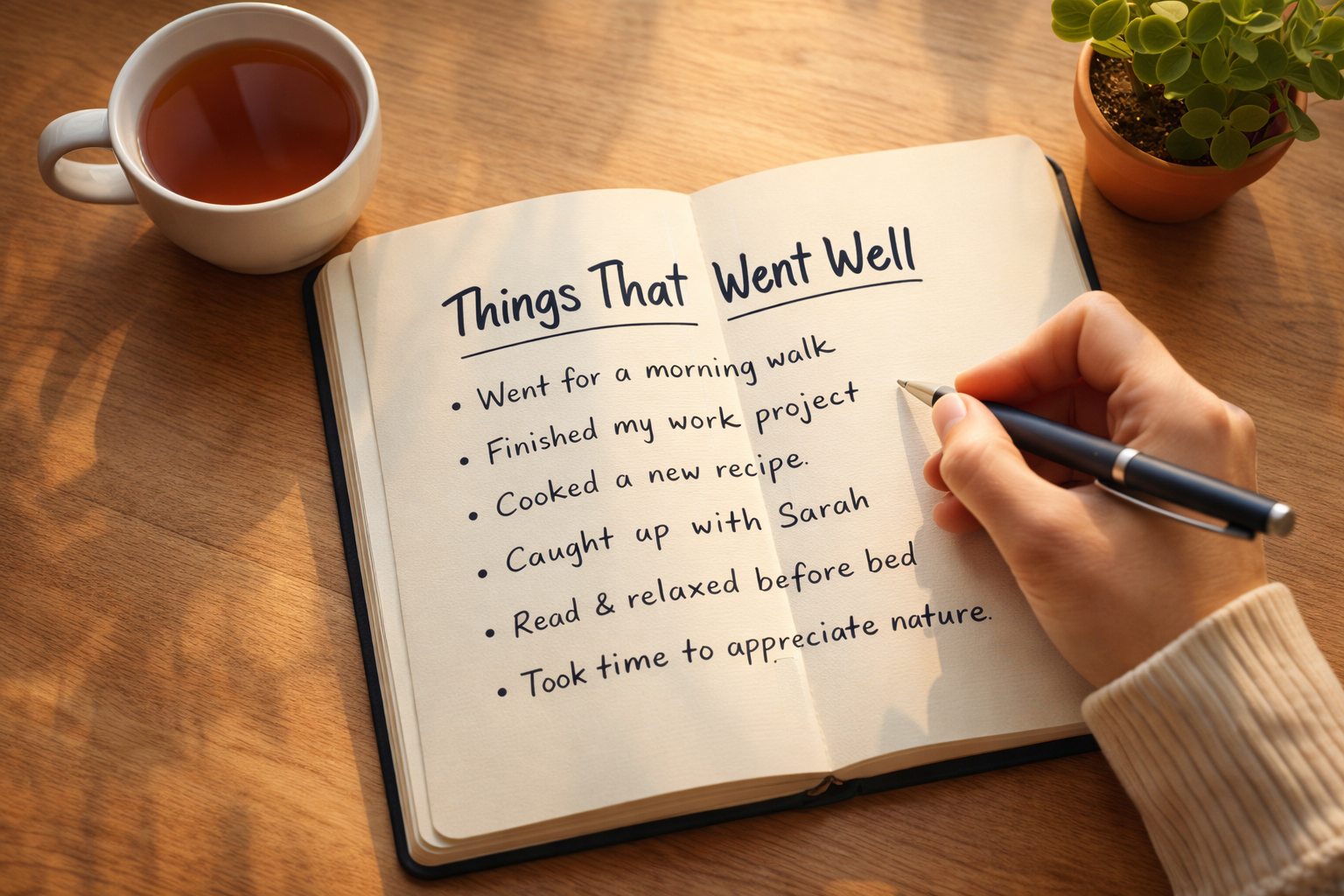
2. Keep a Compliment Log
Write down positive feedback when you receive it. Your brain won't store it reliably on its own, so create an external record. When negativity bias kicks in and tells you no one values your work, you have concrete evidence to counterbalance it.
3. Challenge the Believability Filter
When you catch yourself thinking they are just being nice, ask: Is that actually true, or is that my negativity bias dismissing evidence that contradicts a harsh self-narrative? What would it mean if the compliment were accurate?
4. Reframe Criticism as Data, Not Identity
Criticism stings most when you interpret it as a statement about who you are. "The report had errors" becomes "I am incompetent." Practice separating feedback about behavior from conclusions about identity. The report had errors. That's useful information. It doesn't define your worth as a person.
5. Build the 5-to-1 Ratio Deliberately
In your relationships, work life, and self-talk, aim for five positive interactions for every critical one. This doesn't mean fake positivity. It means noticing and acknowledging what's working, not just what's broken. The same principle applies to how you talk to yourself - if you wouldn't repeatedly criticize a friend the way you criticize yourself, that's worth examining.
When Negativity Bias Becomes a Problem
Occasional rumination over criticism is normal. Everyone does it. But when negativity bias becomes the dominant lens through which you interpret all feedback, it crosses into something more concerning.
Signs that negativity bias has tipped into something worth addressing:
• You can't recall recent compliments but vividly remember criticism from years ago.
• Positive feedback triggers immediate suspicion or disbelief.
• You avoid situations where you might receive feedback because criticism feels unbearable.
• One negative comment ruins days or weeks, regardless of context.
• You interpret neutral statements as criticism even when none was intended.
If this sounds familiar, it might overlap with anxiety, depression, or trauma responses. These conditions amplify negativity bias beyond its normal range. Speaking with a mental health professional can help you develop strategies that address both the cognitive pattern and the underlying emotional state. Understanding when overthinking becomes a mental health concern can also provide useful context.
The Upside of Remembering Criticism
Before you curse negativity bias entirely, it's worth acknowledging that it does serve a function - even now.
Criticism, when it's accurate and delivered constructively, helps you improve. The fact that your brain flags it and holds onto it means you're more likely to notice patterns, make adjustments, and avoid repeating mistakes. The problem isn't that you remember criticism. The problem is when you remember it to the exclusion of everything else.
The goal isn't to become immune to negative feedback. It's to stop letting one critical comment drown out twenty affirming ones. It's to recognize that your brain's tendency to hold onto insults is a feature, not a flaw - but it's a feature that needs active management in a world where most threats are social rather than physical.
Balancing the Scale
You will always remember insults longer than compliments. That's not going to change. Your brain is doing exactly what it evolved to do - prioritizing threats, encoding negative experiences deeply, and keeping you alert to social danger.
But awareness changes how you respond. When you notice your mind replaying an insult for the third day in a row, you can recognize it's not because the insult was uniquely true or devastating. It's because your brain is designed to hold onto it.
And when you notice yourself dismissing a compliment as meaningless, you can pause and ask: What if this is real feedback that my negativity bias is trying to filter out?
The pattern is biological. The response is still yours. And that distinction - between what your brain does automatically and what you choose to do with it - is where change actually happens.


